-
Early Morning (approx. 5:30 AM): The Living Buddhist Tradition
Your day begins before dawn as your guide meets you at your hotel for the most spiritually resonant experience Luang Prabang offers: Tak Bat, the daily morning alms-giving ceremony. In complete silence, a procession of hundreds of saffron-robed monks walks barefoot through the quiet city streets as devoted locals kneel at the roadside, offering sticky rice placed reverently into alms bowls. The scene is bathed in the pale gold of early morning light — a practice unchanged for centuries. Your guide will brief you on the etiquette beforehand, allowing you to observe respectfully or, if you wish, to participate by making an offering yourself.
After the ceremony, visit a local morning market — a colourful, fragrant world of fresh produce, grilled skewers, wild herbs, and the quiet bustle of Luang Prabang waking up. Grab a coffee and a local snack before heading back to freshen up.
-
Late Morning: Golden Temples & Royal History
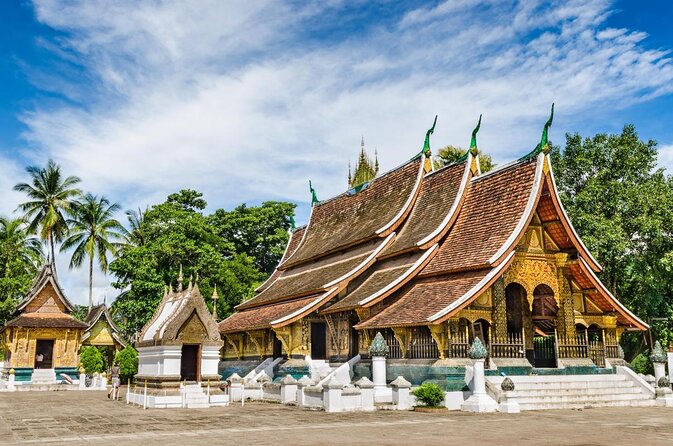
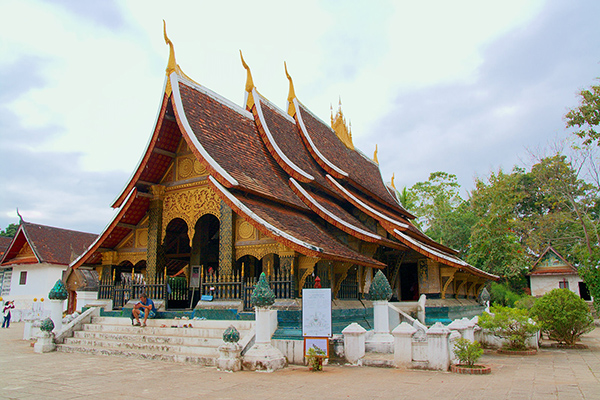
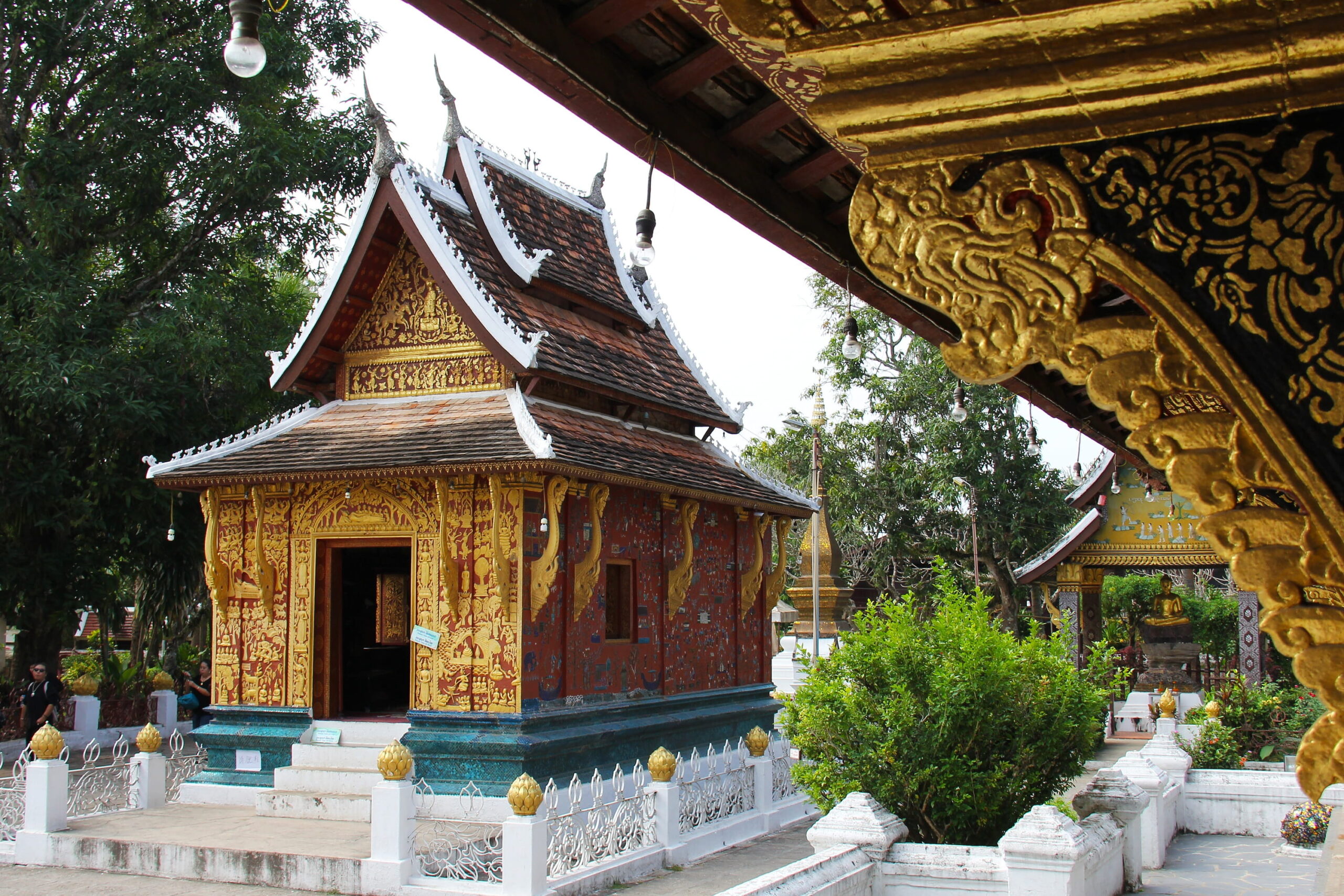
Your first temple visit is Wat Xieng Thong, widely considered the most beautiful temple in all of Laos. Built in 1560 under King Setthathirat, this architectural jewel sits at the northern tip of the peninsula where the Mekong meets the Nam Khan. Its defining feature is the sweeping, multi-tiered roofline that cascades almost to the ground — a silhouette recognised around the world. At the rear of the sim (ordination hall), an extraordinary mosaic of coloured glass tiles depicts the “Tree of Life,” shimmering with dozens of animals, flowers, and scenes of Lao village life. Inside, gilded wooden columns support a ceiling of golden dharma wheels, and centuries-old Buddha images sit in serene contemplation. Your guide will bring the temple’s rich symbolism and royal history to life.
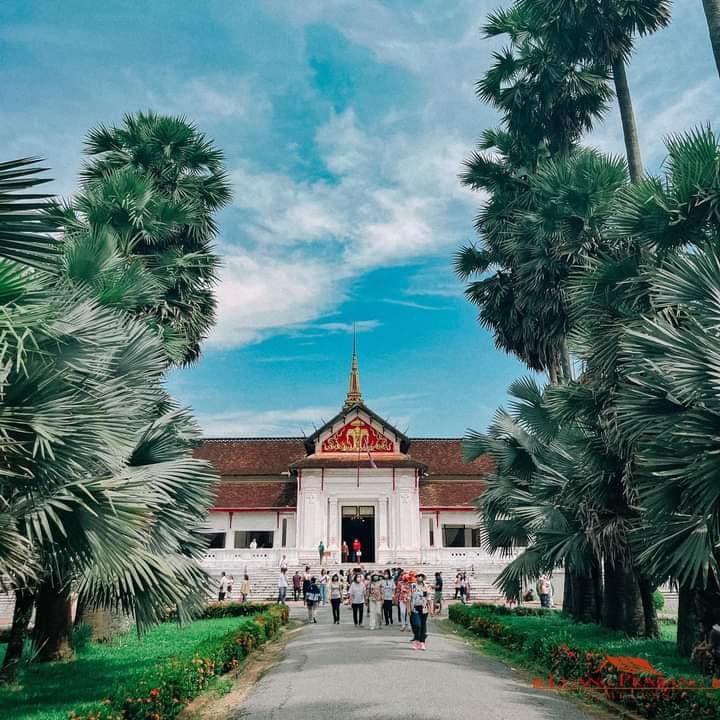
Continue to the Royal Palace Museum (Haw Kham), the former official residence of King Sisavang Vong and his family, built in 1904 during French colonial rule. The building itself is a graceful fusion of French Beaux-Arts architecture and traditional Lao temple design — a physical embodiment of the country’s complex history. Inside, explore the royal reception halls, throne room, and royal bedchambers, all preserved much as they were when the monarchy ended in 1975. The undisputed highlight is the Treasure Room, which houses the Phra Bang — a sacred gold-alloy standing Buddha believed to have been cast in Sri Lanka in the 1st century AD and considered the palladium of the Lao nation.
-
Midday: Lao Culinary Experience
Savour a traditional Lao lunch at a carefully selected local restaurant, where the menu celebrates the distinctive flavours of Luang Prabang cuisine. Expect specialities such as Or Lam — a rich, slow-cooked stew of buffalo meat, dried buffalo skin, wood ear mushrooms, and local herbs unique to this city — alongside Khao Poon, a light and aromatic rice vermicelli soup in a coconut milk broth, and sticky rice served warm in hand-woven bamboo baskets. Lunch is a chance to rest your feet and absorb the day’s experiences.
-
Afternoon: Phou Si Hill & Local Crafts
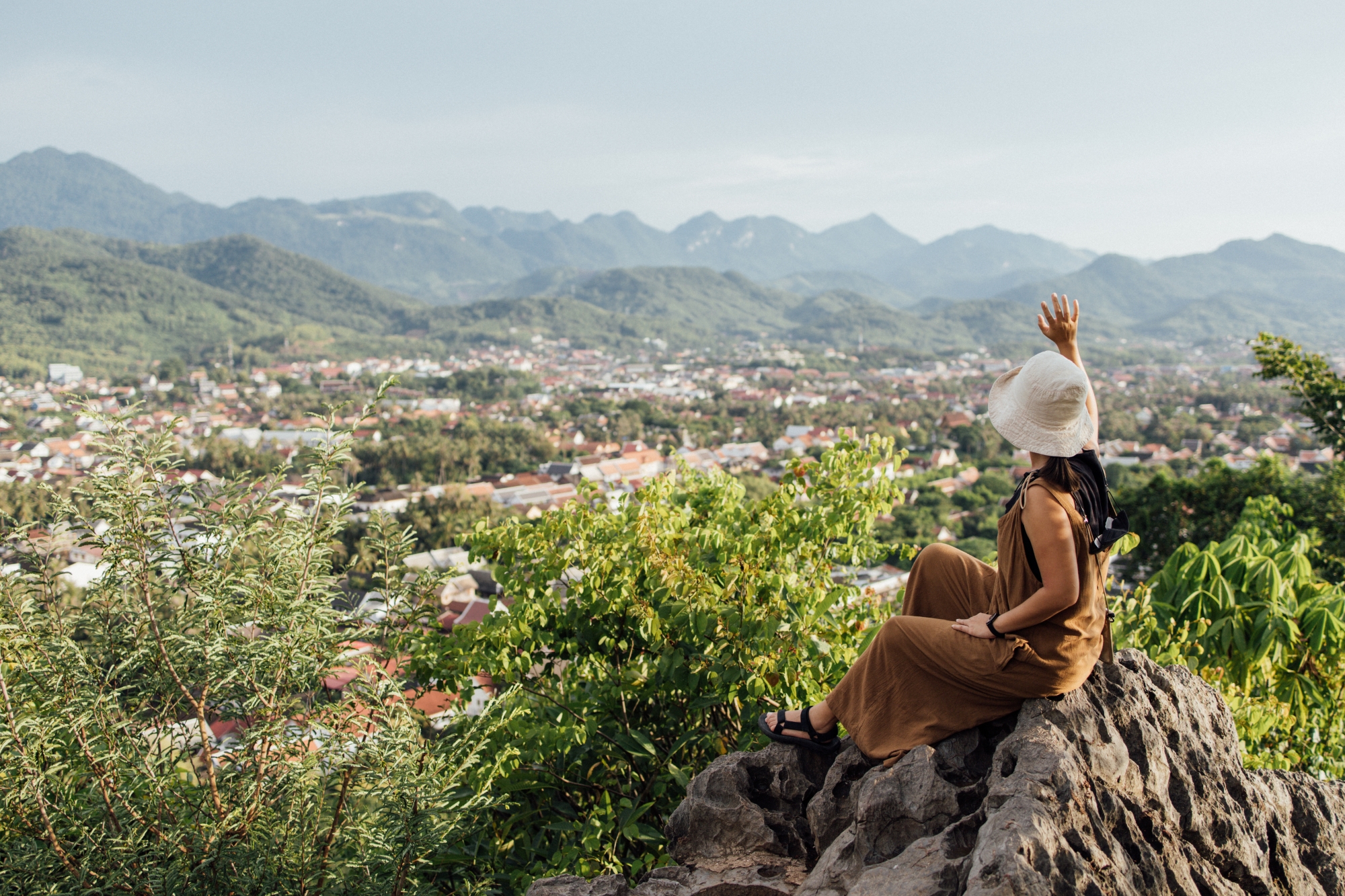
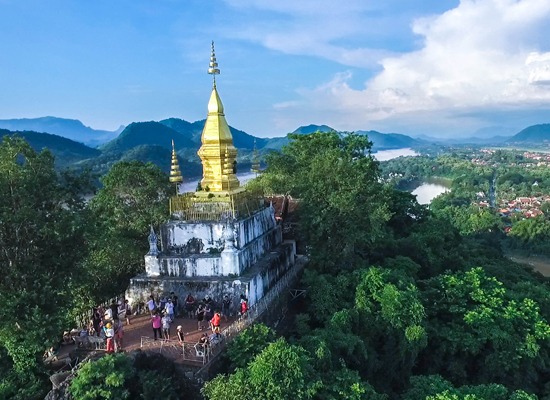
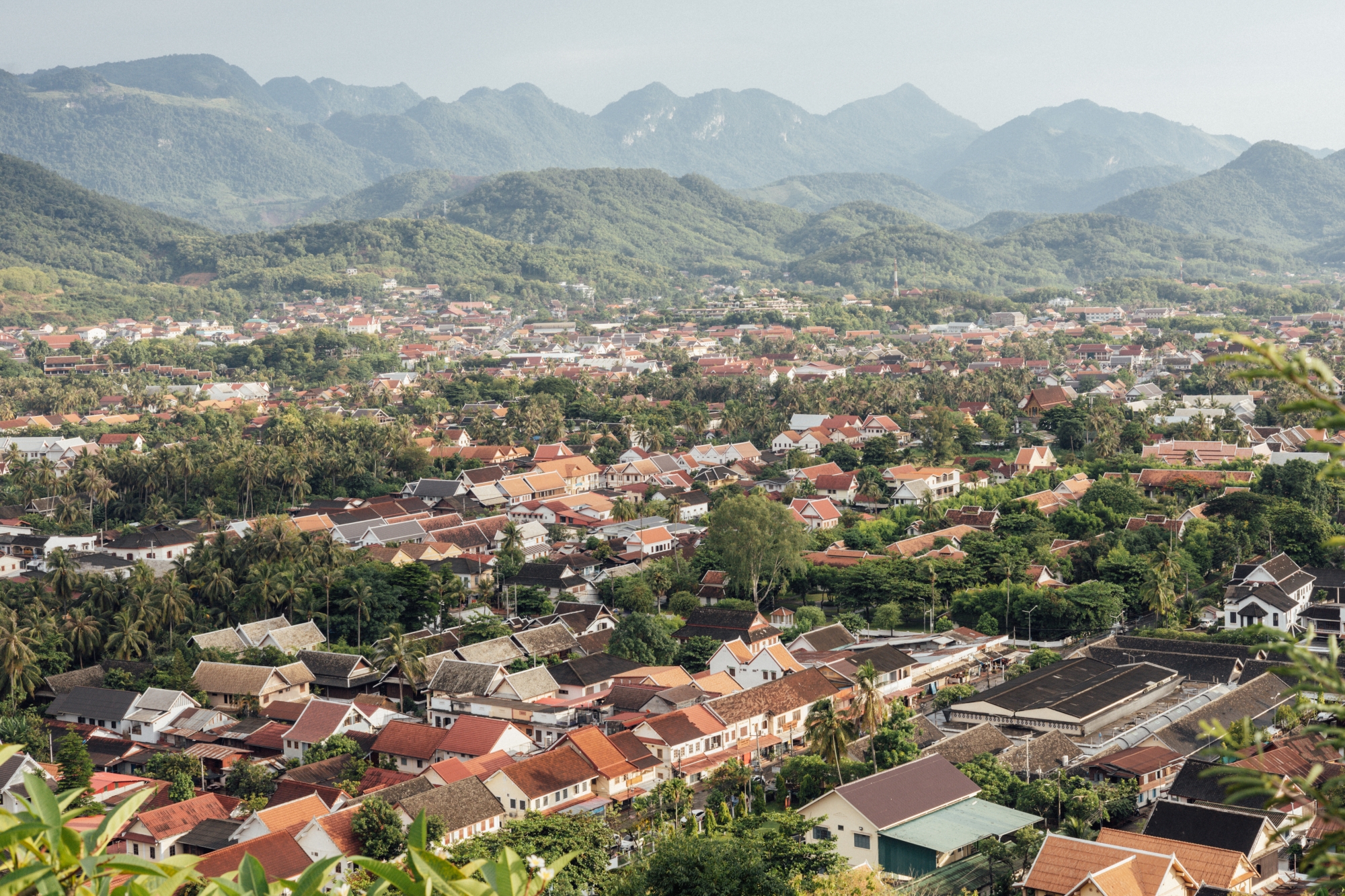
After lunch, make your way to the foot of Phou Si Hill — a 100-metre limestone outcrop that rises dramatically from the centre of the old city peninsula. The 328 steps wind upward through fragrant frangipani trees, small shrines, and Buddha niches carved into the rock face. At the summit, the gilded stupa of That Chomsi crowns the hill and is visible from far across the city. From this vantage point, the view is simply spectacular: the silver ribbon of the Mekong stretching west toward the Thai border, the Nam Khan curling east, the terracotta rooftops and temple spires of the UNESCO Heritage Zone below, and layer upon layer of blue-green mountains fading into the horizon.
Spend the remainder of the afternoon exploring the local craft quarter. Wander past workshops where weavers work at traditional hand-operated looms, producing the intricate geometric patterns of Lao silk and cotton textiles that have been woven in this region for centuries. Browse silversmith workshops, lacquerware studios, and stalls selling natural indigo-dyed scarves, hand-painted umbrellas, and wood carvings — all made by local artisans. This is the ideal time to pick up a meaningful, handcrafted souvenir directly from the maker.
-
Evening: The Night Market
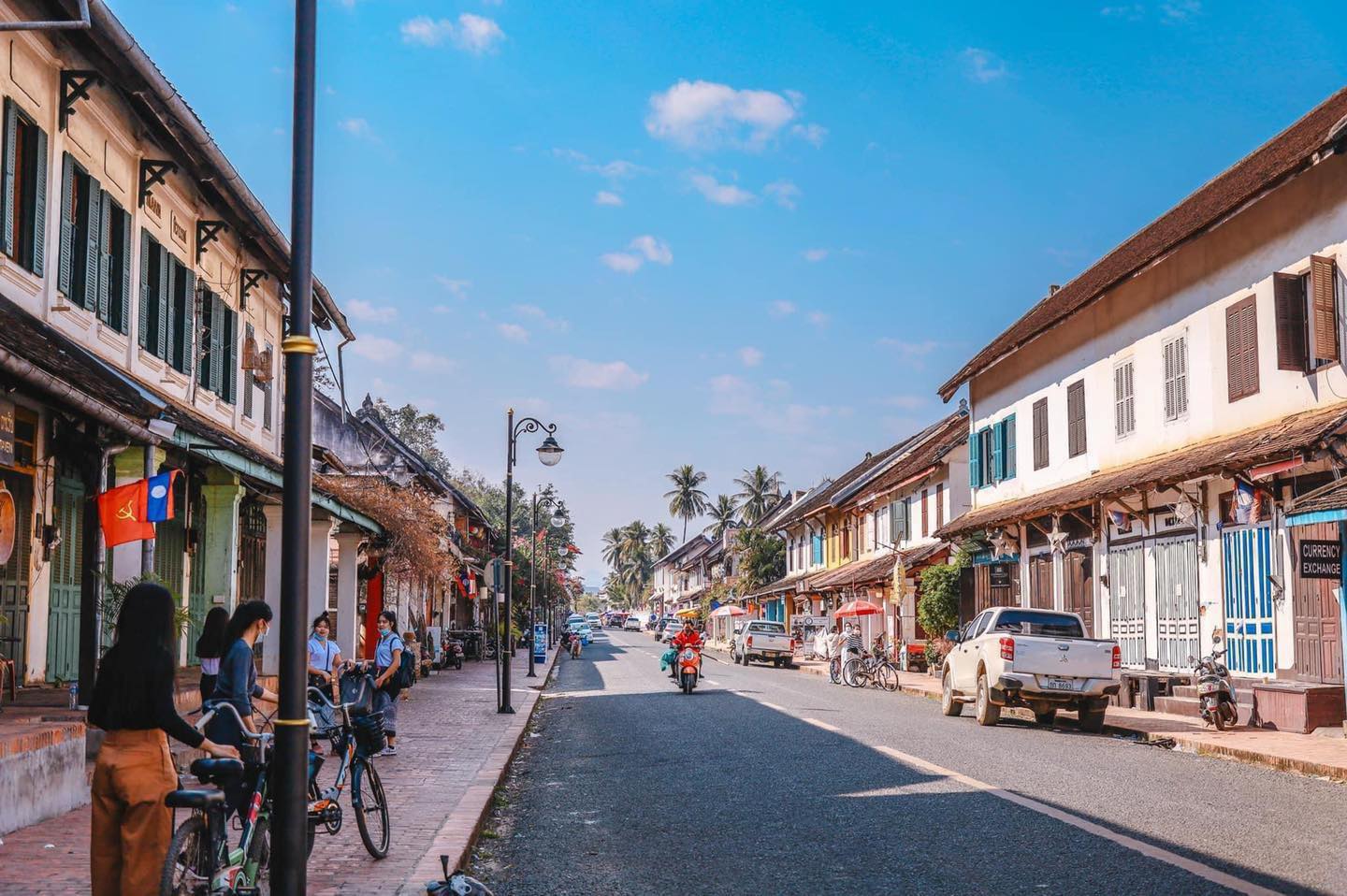
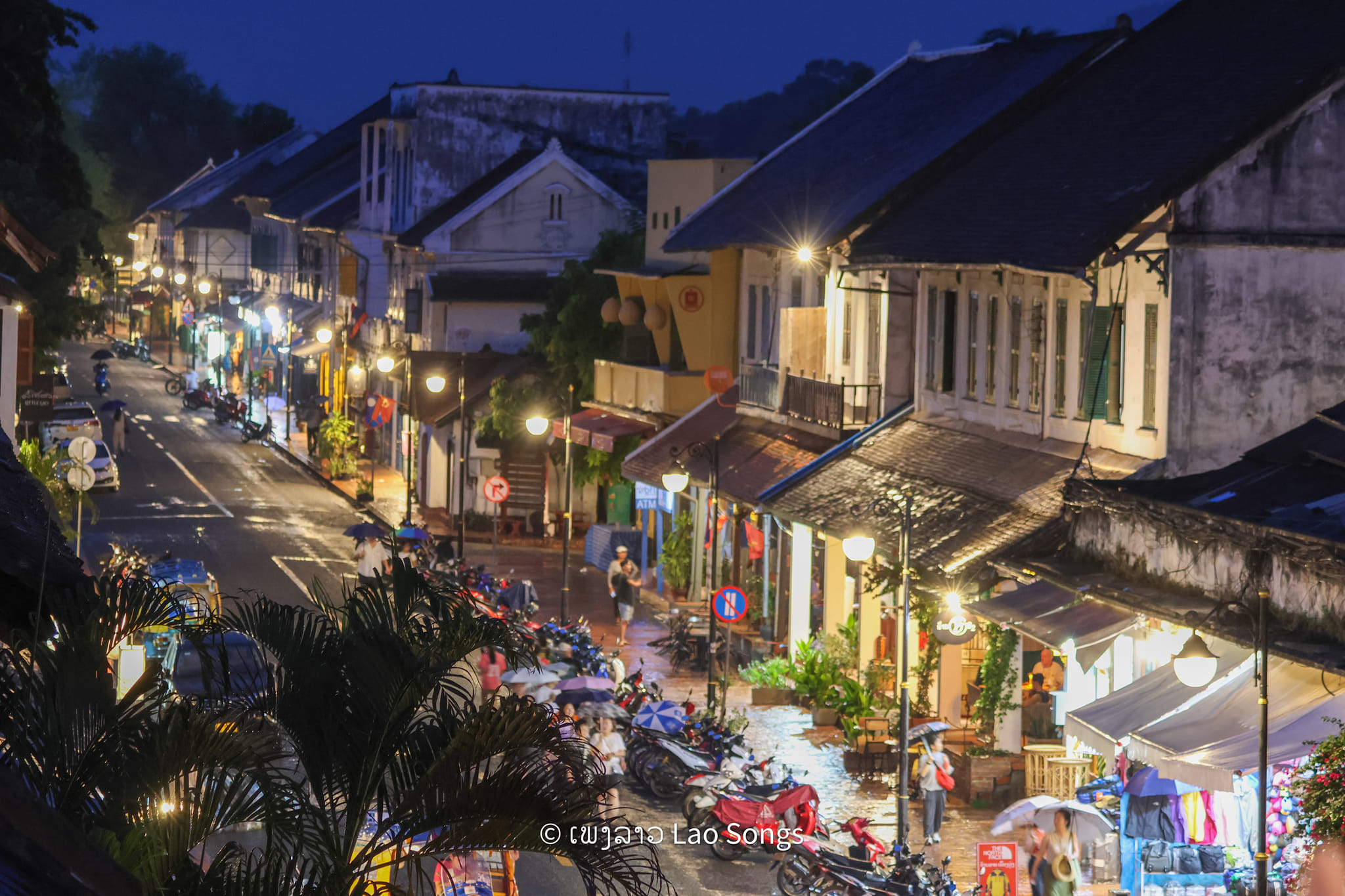
As the sun dips behind the mountains and the day’s heat softens, Luang Prabang’s main street undergoes a nightly transformation. From dusk, hundreds of stalls materialise in a long, lantern-lit procession stretching the entire length of Sisavangvong Road. Many are run by Hmong and Khmu artisans from surrounding villages, who travel into town each evening to sell handmade quilts, embroidered bags, woven scarves, silver jewellery, and carved wooden figurines. The atmosphere is gentle and unhurried — there is no hard selling, just craftsmanship on quiet display. Sample local street food, sip fresh-squeezed sugar cane juice, and take your time soaking in one of the most charming night markets in Southeast Asia before your guide transfers you back to your hotel.